
Rhythm Lessons That Keep Kids Engaged
Teaching rhythm is one of the most important elements of a music curriculum, but sometimes even the tried-and-true approaches can lose their spark. When I began to feel that slump in my own classroom, I found myself digging back into my memories to find inspiration and a fresh way to bring the joy back.
Turning Learning Into Something Memorable
When I was little, my mom had a way of turning almost everything into a game.
One Easter morning stands out more than any other. Our father was in the hospital, and early that morning, my mom had already left to be with him. We woke up to her not being there, and she knew that could feel heavy for the five of us. There would be no typical Easter basket reveal that year.
But when we came downstairs, we found something completely unexpected.
At the bottom of the stairs was a burst of color. Taped to the wall were five different sets of arrows, each in its own color. It looked like a rainbow arrow extravaganza. She had stayed up who knows how long the night before creating it.
Each of us followed our own color trail, winding through rooms, up and down stairs, leading to clues and surprises along the way. The arrows seemed to go everywhere. Eventually, each path led to our Easter baskets.
It was magical.
To this day, I have never forgotten that morning. She took what could have been a sad experience and transformed it into something joyful, creative, and unforgettable.
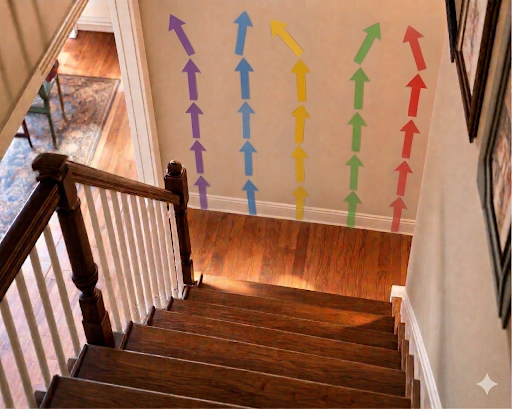
Image generated by AI, but this is what it looked like to me at the time!
Why This Matters in the Music Classroom
Years later, I realized how profoundly that shaped me as a teacher.
Now, when I look around my classroom, filled with movement, color, games, challenges, and creativity, I see her influence everywhere. I want my students to experience learning the same way: engaging, playful, and meaningful.
Because when students experience learning as something fun and creative, the buy-in is huge.
That’s why I weave rhythm concepts into games, songs, and active lessons whenever I can. My goal is simple: by the time a student enters middle school, they should feel confident:
- Feeling, finding, and expressing a steady beat through movement and performance.
- Reading and performing rhythmic patterns accurately within a steady beat or musical context.
- Performing with independence, confidence, and joy
And the truth is, creating lesson plans, songs, and games (that all feel like games) makes that possible.
The Problem With Traditional Rhythm Practice
When I first started out teaching, I relied on some of the traditional approaches like clapping rhythms and asking students to repeat them. Or, asking students to identify isolated rhythms, either through flashcards or worksheets. These are important foundational tools, but over time, I noticed:
- Energy was dropping
- Students were getting bored
- Results were inconsistent
It felt like we were all just going through the motions.
I knew I needed to shake things up.
A Simple Shift That Changes Everything
I realized that rhythm is meant to be experienced. Students need to:
- Feel it in their bodies
- Move to it
- Interact with it
Not just repeat what they hear.
The first shift I made was through my opening routine. I began to write hello songs that didn’t just welcome them into the room, but immediately engaged them in rhythm work. Songs like. “The Beats are Saying Hello to You” and “Hello It’s May” get students moving and clapping from the get-go.
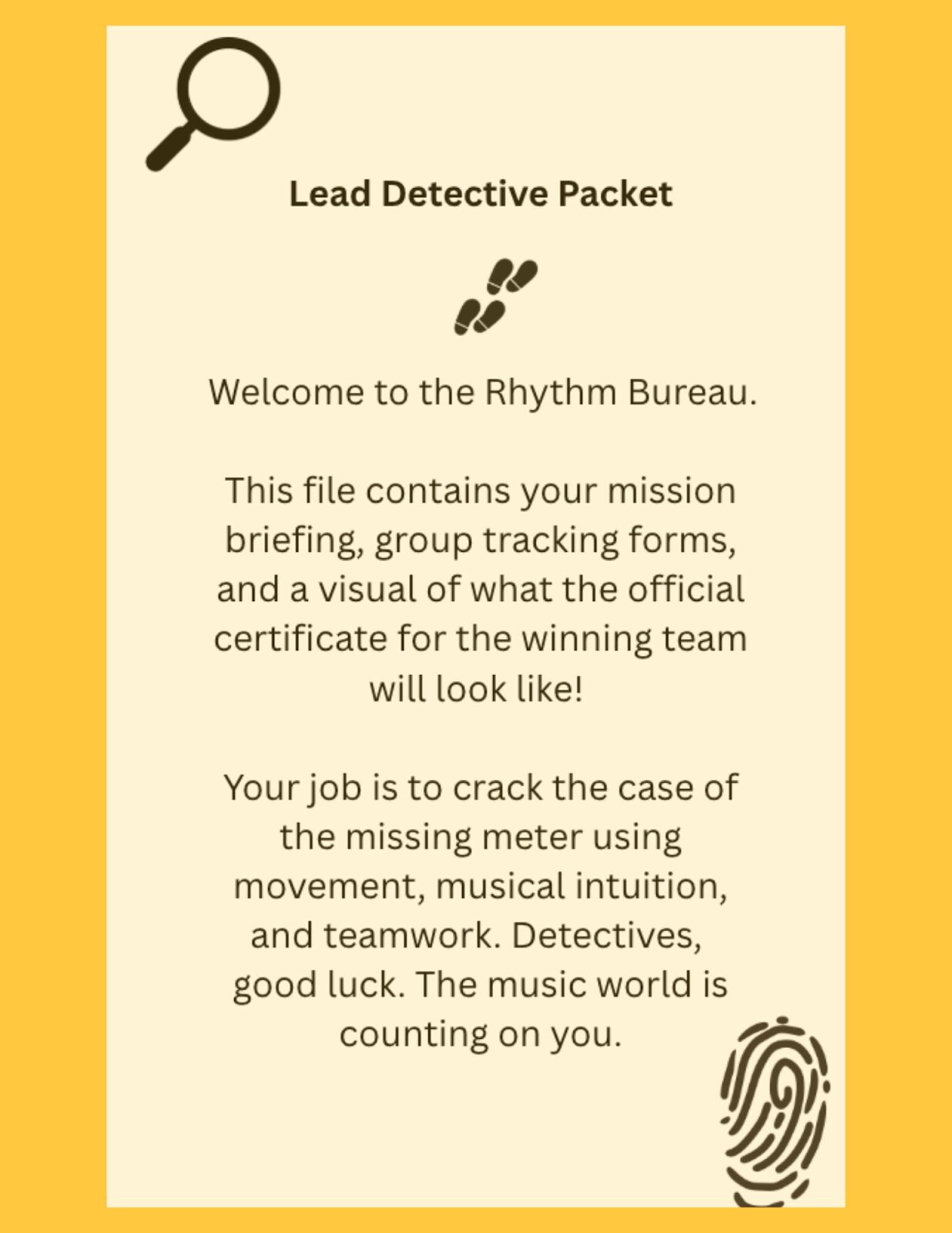
Then I decided that my lesson plans needed to feel like games. For example, in the “Case of the Missing Meter” students are divided into groups and challenged to identify the meter of several familiar songs. Once they solve the “mystery,” they create a body-percussion pattern to match. At the end, each group performs its compositions for the class. This kind of hands-on experience changes everything.
Don’t Forget the Classics
Of course, not everything has to be reinvented.
Some of the best tools are the classics. Games like Bingo and Memory translate beautifully into rhythm practice with just a few simple tweaks. I use these kinds of rhythm workouts all the time. They are familiar to students, easy to manage, and incredibly effective.
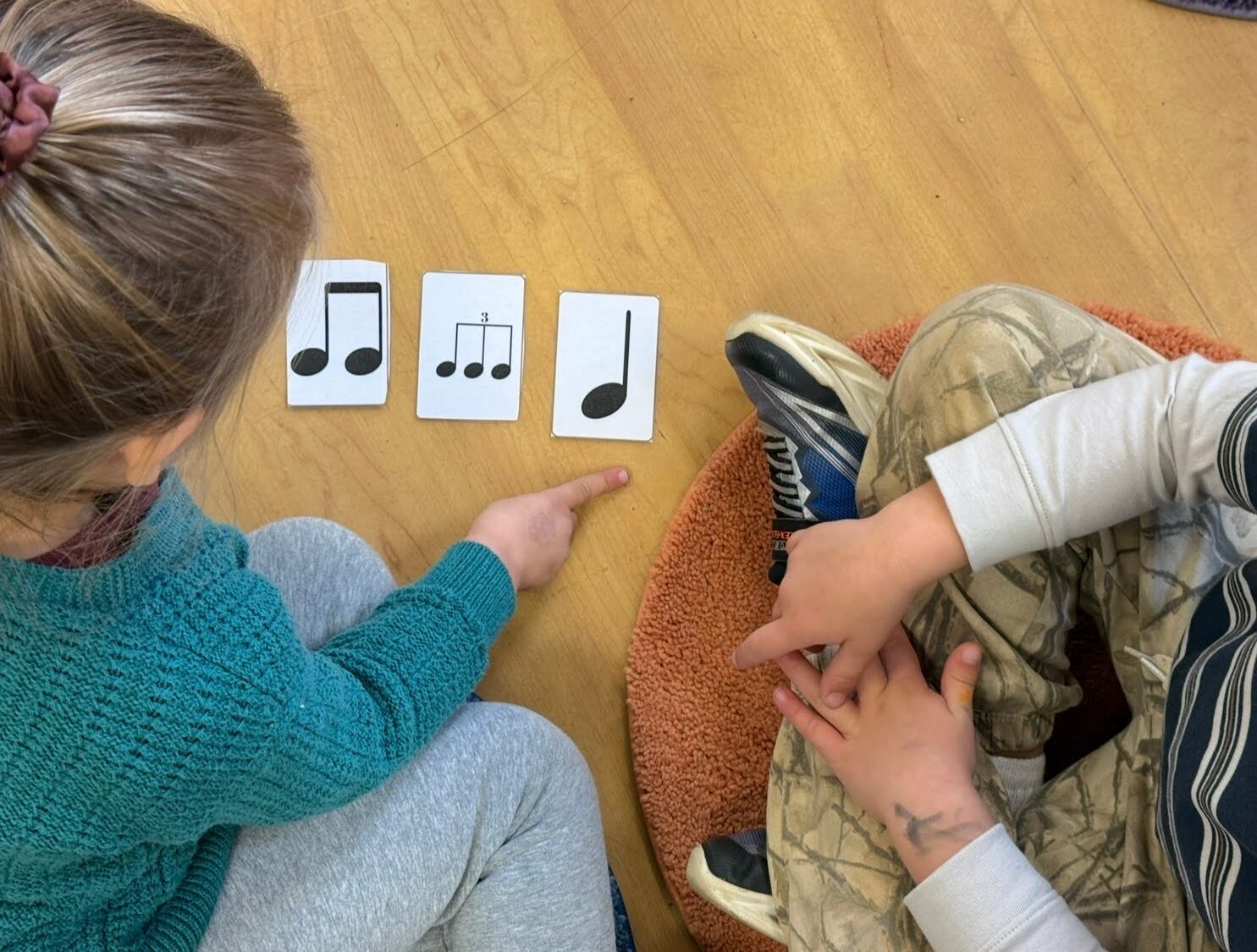
I often use a deck of cards that I also use in my lessons. But now the difference is that when I lay the cards out:
- We Identify the patterns.
- We play them.
- We move to them.
- We feel them.
Sometimes we work as a whole group, and other times in smaller groups, like you see here. That shift from simply recognizing rhythms to actually experiencing them can make all the difference.
Small Shifts, Big Impact
If you’re feeling like your rhythm lessons aren’t landing the way you want them to, it may not be you, but the approach you are using.
Small shifts like:
- Adding movement
- Turning an activity into a challenge
- Building in creativity
…can make a huge difference.
A Final Thought
This philosophy is at the heart of everything I create for Creative Music Room: taking core musical concepts and turning them into experiences students genuinely enjoy.
These are the kinds of rhythm activities I build into every lesson. You can see more examples here.
You might also want to read: Resonating Rhythms and Rhythmic Tales: Music Lessons in a Story.